ECE · B2B Product Design · 2026
ECE County Customer Portal
Turning a promised B2B portal into a working product, from discovery to handoff in two weeks.
ECE brings together ProSolutions Training and ChildCare Education Institute, which sell certification coursework to early childhood educators. Through its B2B business, states and counties buy bundles of training and cover the cost for their employees.
Each of those organizations needs a portal of its own, with its own name, identity and learners, while the business needs one product it can scale. A new portal had already been promised, with a deadline attached.
View Prototype (interactive Figma Make prototype, opens in a new tab)
Show Admins What They Manage
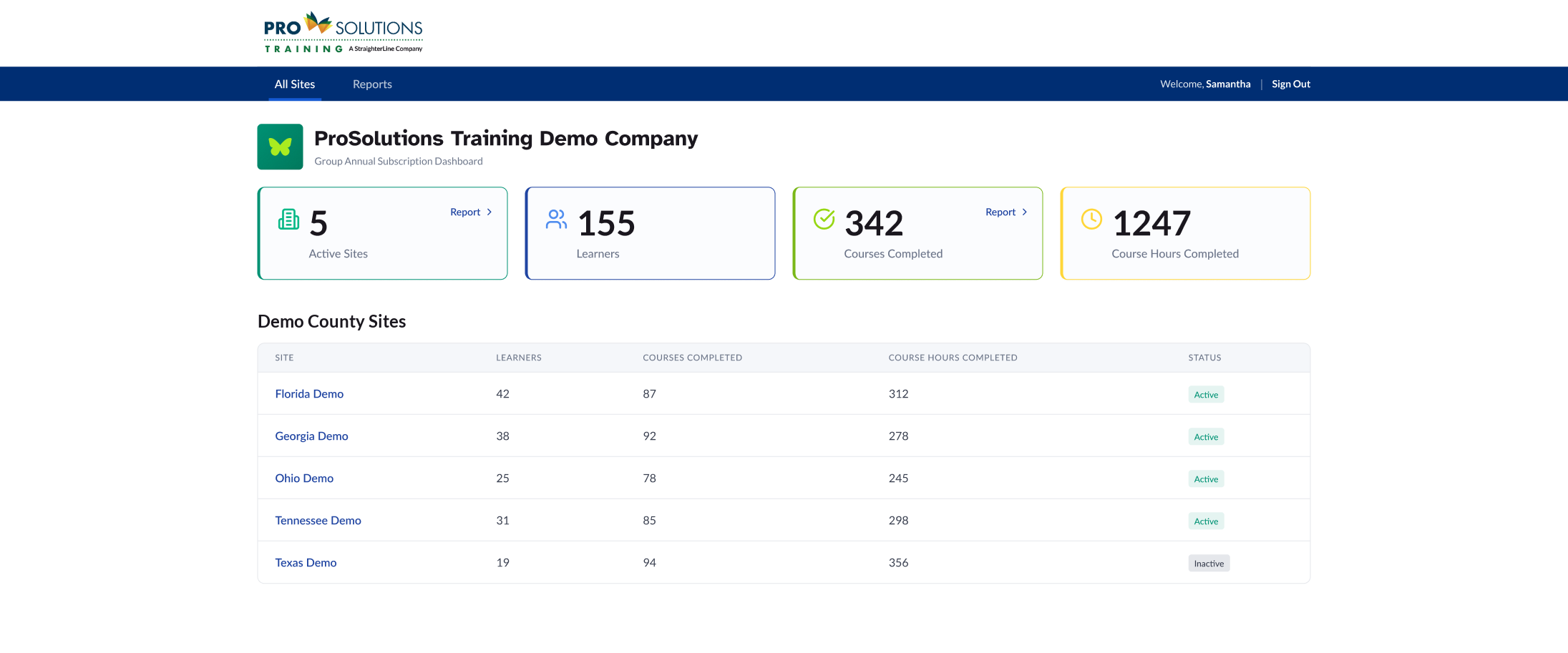
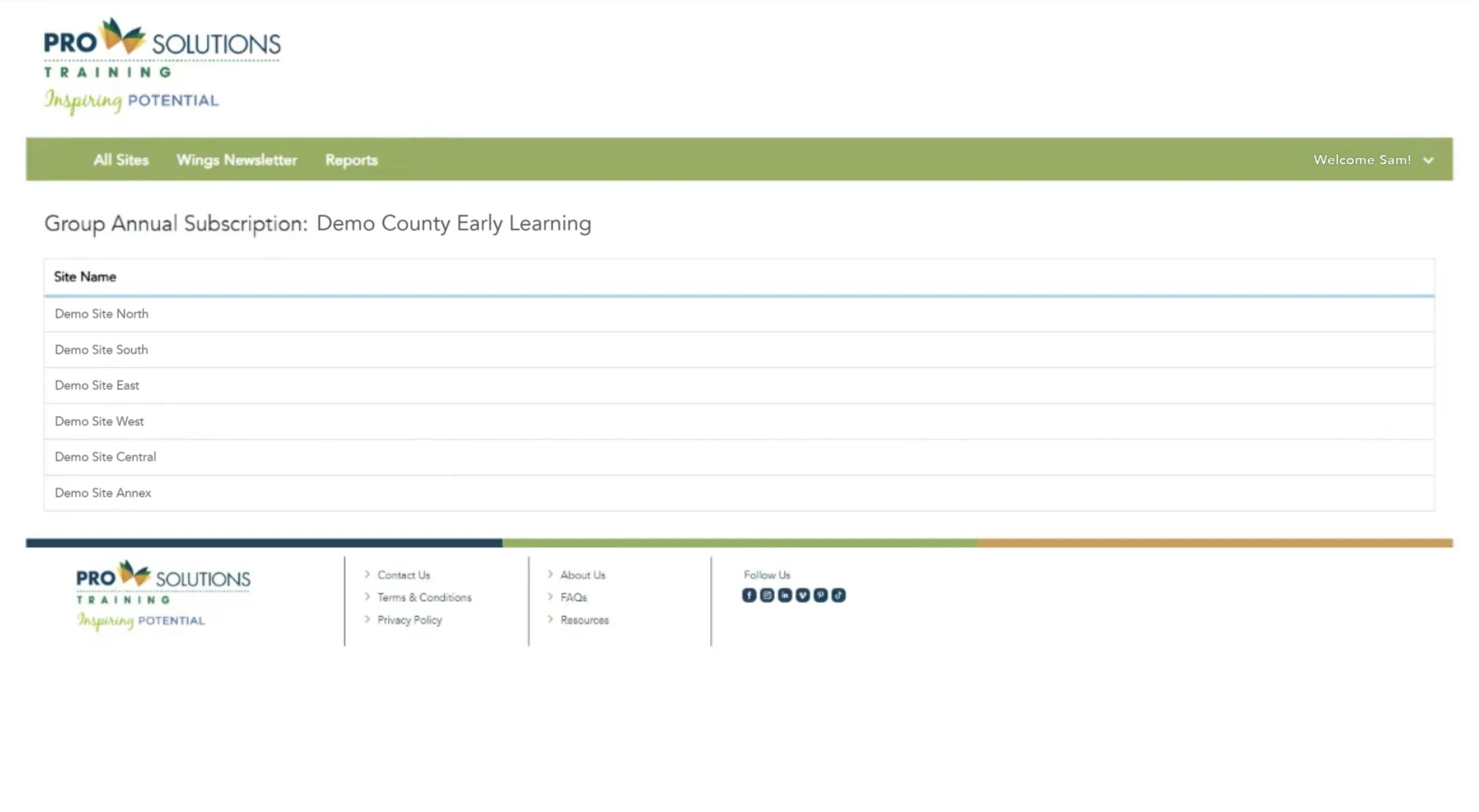
The existing portal reflected the system’s structure rather than an administrator’s priorities. Its home screen was a branded list of site names. Administrators could see which sites they had, but not how many learners were active, what coursework was getting done, how many seats remained or where reports lived.
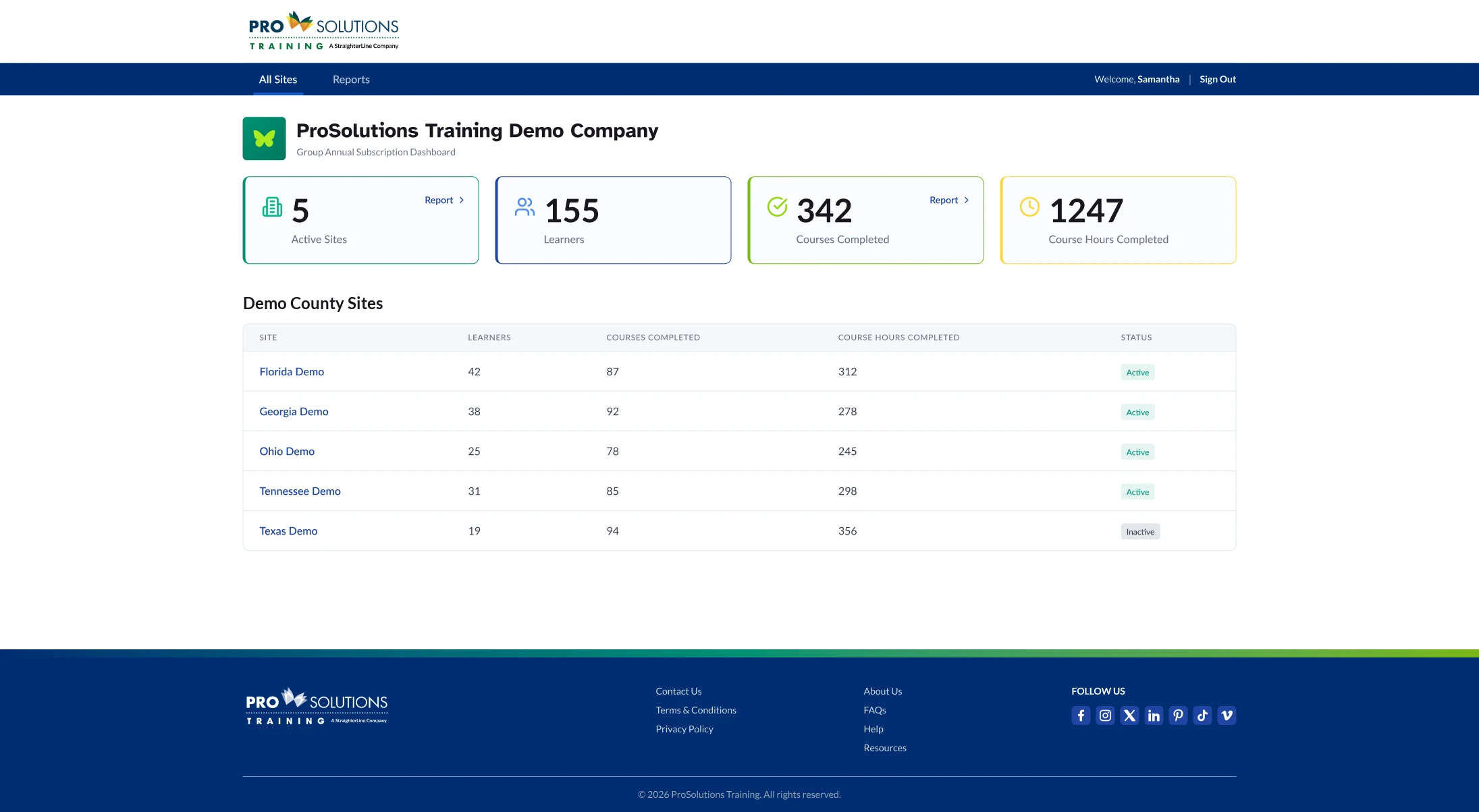
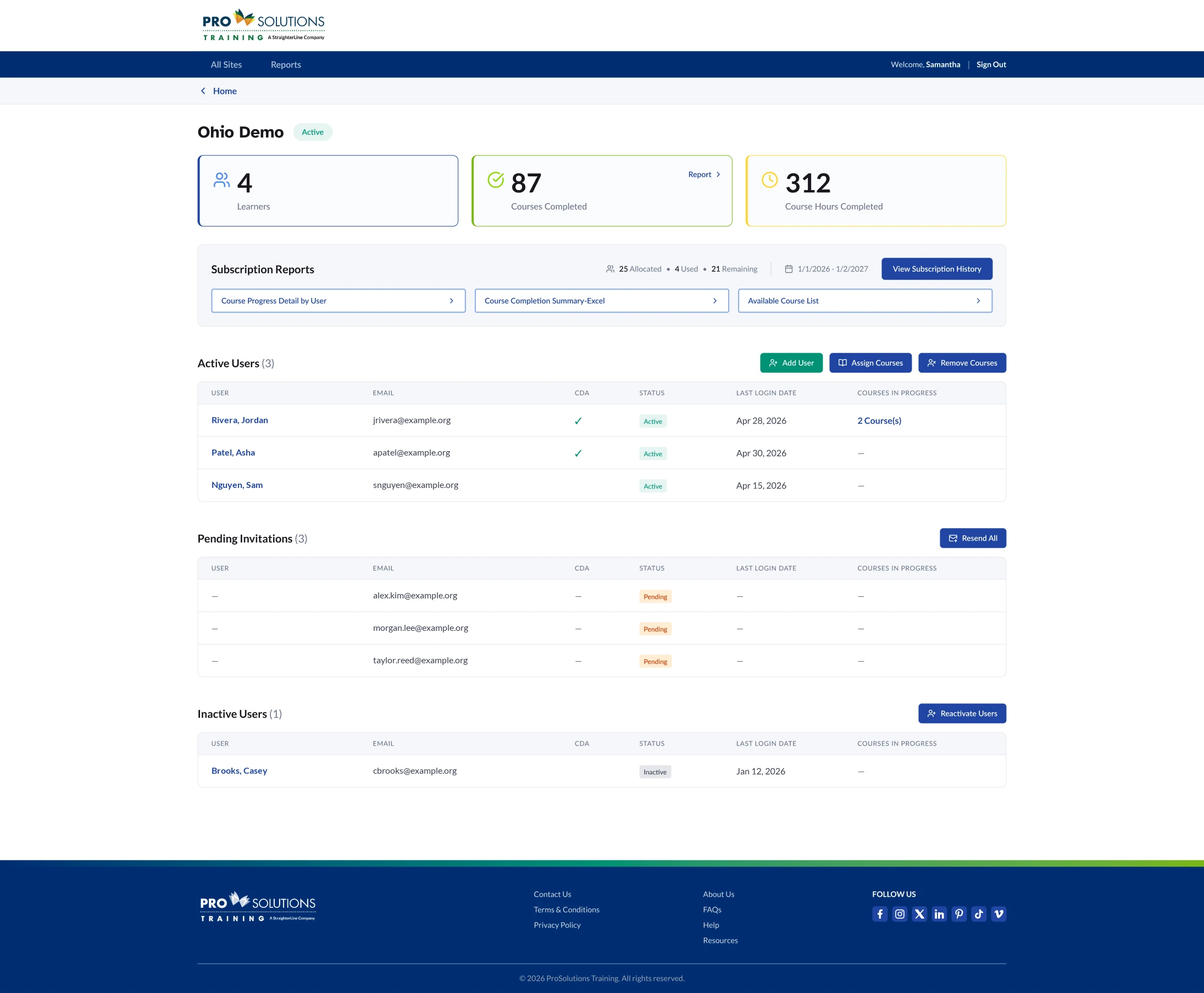
The redesign reverses that hierarchy. The home view leads with the health of the whole subscription: active sites, learners, courses completed and course hours, with reports one step away. Each site then opens into the people and actions inside it: seats and subscription dates, site reports, active, pending and inactive users, and the controls to add users or assign courses. The resulting hierarchy moves from subscription to site to person, with the actions and information relevant to each level.
One Product, Every County
Customer identity needed to vary without creating customer-specific products. Each county or state needed a portal that was recognizably theirs without changing the underlying product model.
That meant defining customization as data and identity, not creating a different product for every customer. What changes from one organization to the next is its name and identity, its sites, its learners and its subscription. What stays the same is the information hierarchy, navigation, summary patterns, reporting and user management. Administrators get a portal that feels like their own, and a new customer doesn’t require a new product.

The Prototype Was the Handoff
The conventional delivery path was already incompatible with the deadline. An outside design and development estimate came in around $20K, with delivery projected two to three months late.
The alternative was a different delivery model. Working with Engineering, I helped establish an AI-assisted workflow where the design deliverable was a functional Figma Make prototype rather than a set of static screens.
Discovery, design, and the working prototype took the first week. Final refinement and handoff took the second. Because the prototype included usable code, Engineering could carry that work into implementation. The prototype became a bridge into production rather than a conventional design handoff, with Engineering building the production portal from there.
Outcome
The final portal went live one week early.
Explore the working prototype used to bridge design and development.
2 weeks Design to handoff
1 week early Final delivery